

Today I am providing my English translation of an article by Pietro Cutuli, originally in Italian and published first on cese-m.eu on Monday 3rd August 2026 and then on ComeDonChisciotte.org on Wednesday 12th August 2026.
(All emphasis original, footnotes mine).
Introduction: a divergence in technological philosophy
The Chinese approach to artificial intelligence represents a significant departure from the Western model. While the United States focuses on massive capital investment, brute-force computing power and closed ecosystems, China is charting a different course, based on the long-term strategic planning characteristic of its socialist planned economy. This system allows for the optimisation of the efficiency, accessibility and material sustainability of AI1 technologies, rather than simply pursuing maximum computing power.
The divergence is philosophical rather than technical. The West, led by private players such as OpenAI, Google and Nvidia, pursues a logic of immediate profit and the accumulation of competitive advantage through closed, proprietary models. China, on the other hand, coordinates the public and private sectors with a view to integrated social development: AI is not an end in itself, but a tool for reducing inequalities, boosting national productivity and building a more equitable society.
The Western silicon crisis: when the market becomes a cartel
The de-democratisation of silicon
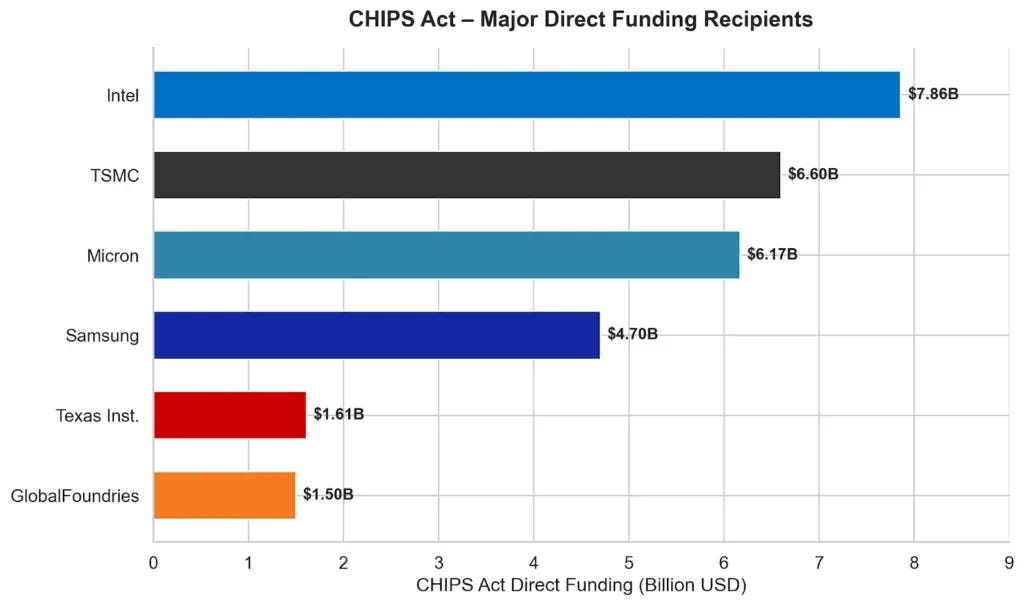
It all began with an announcement that went largely unnoticed. Micron – one of the three pillars of global dominance in DRAM2 memory – is discontinuing the Crucial brand, synonymous with affordable SSDs3 and RAM4 for end users. The silicon that powered Crucial is being diverted to another purpose: artificial intelligence data centres. And while this was happening, Micron was pocketing ~$6.4 billion from the CHIPS Act – public funds earmarked to “save American technological sovereignty”. But this reverse Robin Hood also operates a revolving door: Micron has spent over $4 million a year on lobbying (under both the Biden and Trump administrations), donated $1 million towards the presidential inauguration, and contributed funds for the White House ballroom. The State takes money from taxes, transfers it to Micron, and Micron reinvests in political protection. Citizens pay twice.
Computing is ceasing to be an asset you own and becoming a service on which you depend. Computing no longer takes place on your desk, but in air-conditioned hangars in Nebraska or Virginia, while you merely receive the final result on a screen. You have become perpetual tenants of the cloud.
Induced structural scarcity
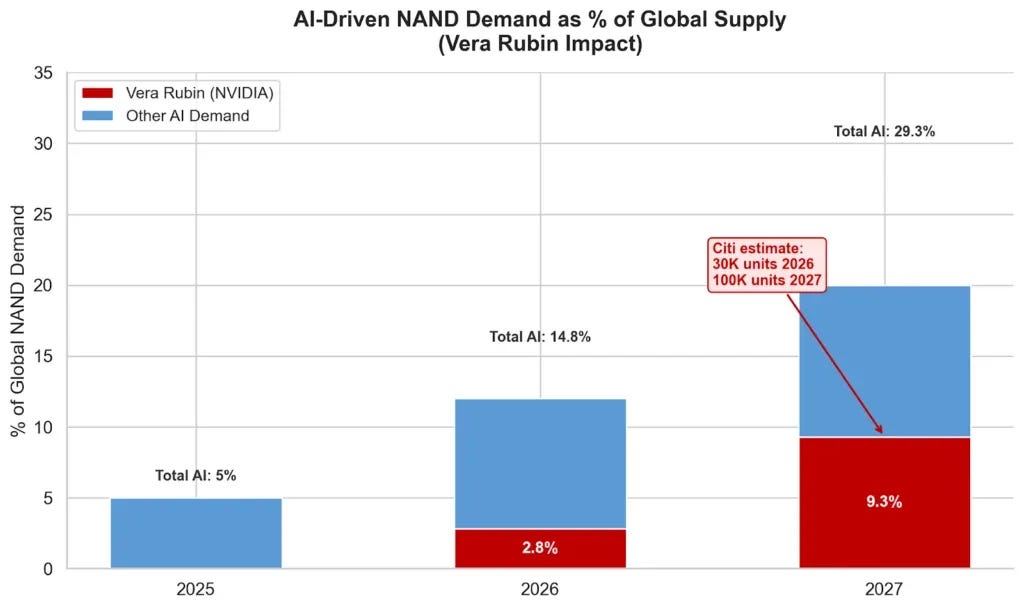
Artificial intelligence isn’t just about GPUs5. It is also – and above all – about storage. Enormous quantities of NAND memory are needed to store models, datasets and neural network weights. Vera Rubin, Nvidia’s 2026 architecture, requires over one petabyte of SSD per system. To give you an idea, a petabyte is a million gigabytes. And if you multiply that by the thousands of systems that the major cloud providers are deploying, you will find that Vera Rubin alone will account for over 9.3% of the entire global demand for NAND by 2027 (Citi estimate: 2.8% in 2026, 9.3% in 2027). Not 9.3% of a sector, not 9.3% of a niche: 9.3% of all memory silicon produced on the planet, consumed by a single company’s architecture.
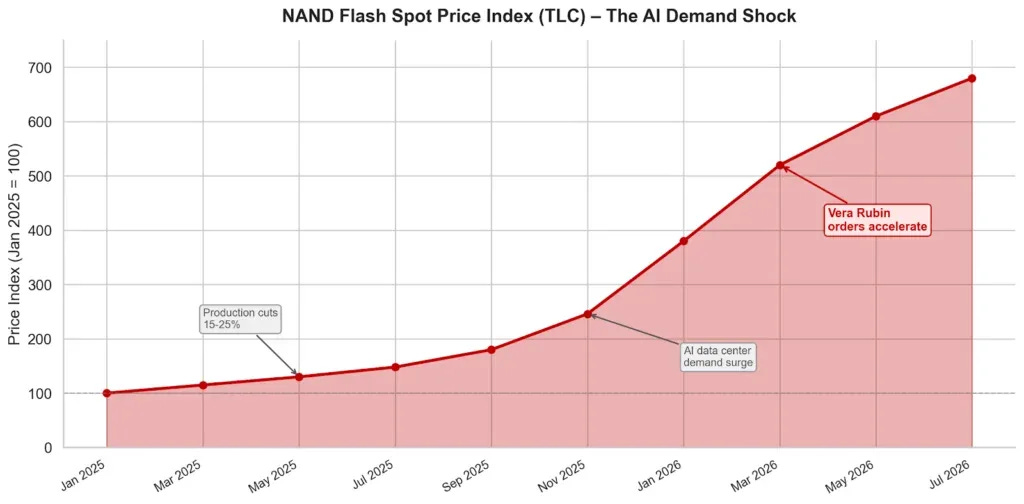
Such sudden and voracious demand should have sent the markets into a tailspin, boosted production and triggered a rush to invest. But no. The memory cartel no longer needs secret meetings as it did in the 2000s, when the DOJ6 imposed fines totalling $731 million and prison sentences. Today, Samsung, SK Hynix and Micron, which control over 95% of global DRAM production and are the leading NAND manufacturers alongside Kioxia and SanDisk, use public signalling: keywords such as “capital discipline” and “prioritising profitability” in their quarterly financial reports serve to coordinate their actions openly, without breaching any antitrust laws. Between 2024 and 2025, they deliberately reduced NAND output by 15–25%, cutting production to “safeguard profitability”. This is not a self-regulating market. This is a cartel that coordinates its actions. Call it a conscious oligopoly, call it a tacit understanding: the result is that a few companies, sitting around an invisible table, have jointly decided that producing less silicon and selling it at higher prices was more profitable than meeting the planet’s actual demand.
The consequence is an induced, structurally engineered scarcity, devised behind closed doors. Consumer channels have been dried up: Western Digital and Kioxia have stated that capacity for 2026 is entirely reserved by cloud customers. And TLC prices have skyrocketed: +246% from the start of 2025 to December 2025; TrendForce has revised its estimates upwards to an increase of +55–60% in Q1 2026. But the damage is not limited to consumers. Motherboard sales have plummeted by 40–50%: if you do not buy RAM, you do not buy the whole PC, and the entire consumer hardware ecosystem – cases, coolers, power supplies – implodes in a domino effect. Samsung, SK Hynix and Micron do not bear this cost: they profit by selling at triple the price to the enterprise sector. The social cost is passed on to thousands of workers and millions of consumers.
Hardware sovereignty, Taiwan and the advantage of green data centres
The Nvidia ban and the emergence of an alternative ecosystem
The United States has imposed controls on exports of advanced chips since October 2022, which have been tightened until March 2025. The aim: to block Chinese access to Nvidia’s H100, H200 and subsequent GPUs – the heart of AI training.
China’s response was not to give in, but to accelerate along two parallel tracks. The first: Huawei Ascend (910B from 2023, 910C and later). The second: SMIC7, which has demonstrated production capability at 7nm via DUV8 multi-patterning, bypassing ASML’s9 EUV10 ban. Huawei has also developed the Kirin 9100 chip for smartphones and the Ascend chips for data centres, despite the sanctions. The result is a rapidly maturing alternative ecosystem. While the Western world relies on CUDA11 – Nvidia’s proprietary ecosystem – China is building its own software-hardware stack around Huawei’s CANN (Compute Architecture for Neural Networks) and MindSpore, the Chinese open-source AI framework. It is not yet on a par with CUDA in terms of ecosystem maturity, but the gap is closing faster than many Western analysts are willing to admit. China is not seeking to replicate the Nvidia ecosystem: it is building something different, optimised for its own needs and immune to American geopolitical leverage.
The crucial vulnerability remains Taiwan. TSMC12, the world’s largest manufacturer of advanced semiconductors, concentrates most of its production of the latest-generation chips there. Any crisis in the Strait would not only halt Chinese supplies but bring the entire global semiconductor supply chain to its knees. Beijing knows this and is investing heavily in its own technological sovereignty. At the same time, it is focusing on algorithmic efficiency to reduce its reliance on American hardware. DeepSeek-V3, with its Mixture of Experts (MoE) architecture13, has demonstrated that it is possible to achieve world-class performance at a fraction of the estimated cost of comparable Western models.
DeepSeek V4: the first state-of-the-art model designed for Chinese silicon
On 24th April 2026, DeepSeek released a preview of V4, renewing its MIT14 (open-source) licence – and alongside that release came news that many in the West have underestimated: Huawei announced full “day zero” support for DeepSeek V4 on its Ascend AI SuperNode platform. For the first time in history, a state-of-the-art AI model has been designed, trained and made available for inference on Chinese silicon, without Nvidia being involved in the process. DeepSeek granted Huawei early access to pre-release weights and kernel optimisations to ensure production-grade performance right from launch.
The geopolitical significance is enormous. It is not merely a technical matter of hardware compatibility: it is a statement of intent. DeepSeek V4-Pro, with its 1.6 trillion parameters, its Compressed Sparse Attention which reduces FLOPS15 (a processor’s computational power) by 73% and KV cache occupancy (a fundamental optimisation technique in Large-Language Models (LLMs) that accelerates text generation by storing previous calculations in memory) by 90%, is not a model that merely “works” on Ascend. It is a model that has been optimised for Ascend right from the architectural design stage. China is no longer playing catch-up with the CUDA ecosystem: it is demonstrating that it can compete at the cutting edge with its own complete stack.
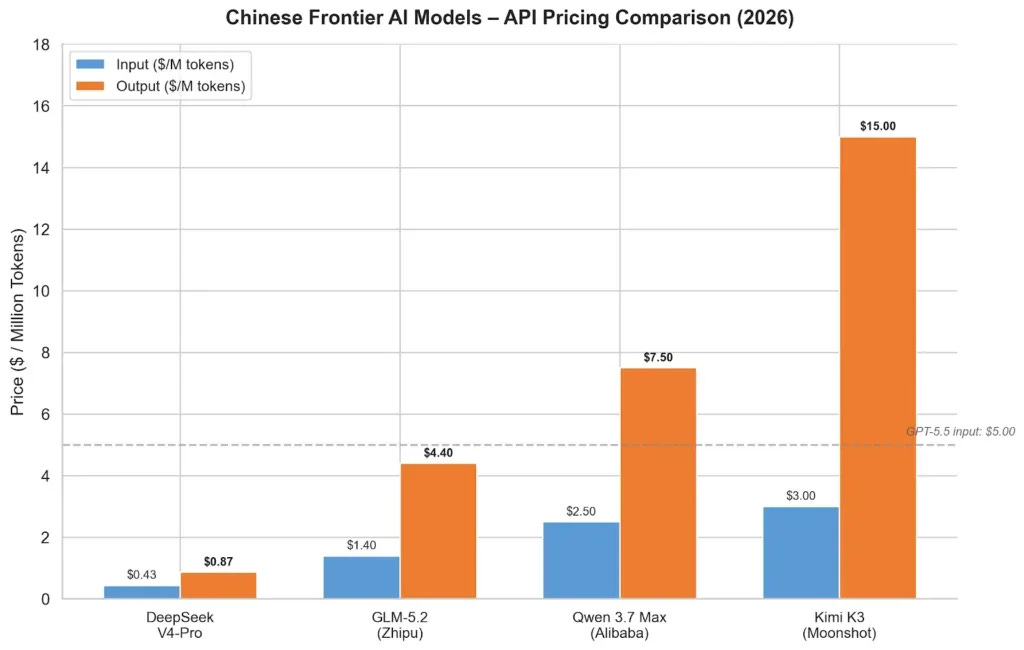
And that’s not all. The most advanced model, DeepSeek V4-Pro, with updated API16 prices of $0.435 per million tokens for input and $0.87 per million tokens for output, has immediately become the benchmark for anyone wishing to train and deploy AI models on Chinese infrastructure – not out of ideological choice, but for purely practical economic reasons. A Chinese data centre equipped with Huawei Ascend GPUs can now run a state-of-the-art model at a lower cost than a Western data centre using Nvidia, without the risk of supply chains being disrupted by unilateral sanctions.
Chinese memory: from a decade-long gap to three years
But China’s hardware sovereignty is not measured solely by logic processors. There is a second, equally decisive front where the contest with the West plays out on even rougher terrain: that of memory. If the computing chip is the brain, memory is the memory – in the literal sense of the term – and without it no artificial intelligence model, however sophisticated, can function. Here, the historical dominance of Samsung, SK Hynix and Micron has seemed unassailable for years. Things are changing, and fast.
CXMT, ChangXin Memory Technologies, has established itself as China’s national champion in volatile DRAM memory and has increased its global DRAM market share from 3% to 8% (Q1 2025 → Q1 2026), becoming the world’s fourth-largest manufacturer. In the field of NAND solid-state memory, YMTC, Yangtze Memory Technologies, has fared even better: with its proprietary Xtacking architecture, now in generation 4.0 and beyond, it has reached around 13% of the global market share in Q1 2026 (up from around 8% a year earlier), competing on equal terms in terms of integration density with products from Western leaders. YMTC’s secret lies in having realised that architectural innovation can compensate, at least in part, for the disadvantage in advanced lithography: stacking transistors vertically using sophisticated engineering allows the constraints imposed by the lack of latest-generation EUV machines to be circumvented. But behind these figures lies a geopolitical backdrop that few talk about.
In 2022, Apple was on the verge of signing a deal with YMTC for the NAND flash memory in iPhones destined for the Chinese market: it cost 20% less and was technologically superior. The deal fell through due to the direct intervention of US senators (Rubio, Warner, Schumer), who pushed for YMTC to be immediately added to the Entity List. There was no real security threat: there was a threat to the profit margins of Micron, which held 23% of Apple’s flash memory contract. US geopolitics stifled free competition to protect a beneficiary of the CHIPS Act.
Before CXMT, China had pinned its hopes on Fujian Jinhua for DRAMs. Micron accused the company of industrial espionage via UMC17 (Taiwan); the US added Jinhua to the Entity List in 2018, blocking its machinery and bringing the project to a standstill before production could begin. In February 2024, a US federal court acquitted Fujian Jinhua entirely due to lack of evidence. Too late: the company had already been destroyed. The lesson is crystal clear: the Entity List is a pre-emptive weapon, not an instrument of justice. Washington won the Jinhua battle, but lost the strategic war: China has learnt to build CXMT and YMTC to survive without American technology.
Behind CXMT and YMTC lies the visible hand of the Chinese state: through the “Made in China 2025” plan and the so-called “Big Fund”, the national fund for the semiconductor industry, which has pumped tens of billions of Yuan into factories and R&D. The American response – the Entity List for YMTC and ASML restrictions – has backfired.
The shift in market sentiment and the reality of security
For years, Chinese silicon has aroused mistrust, if not outright hostility, amongst buyers and technology decision-makers. There was a deep-rooted prejudice – fuelled largely by Western propaganda – that memory chips and processors manufactured in China were, by definition, less reliable. Today, that prejudice clashes with a harsh economic reality: DRAM and NAND prices have risen to unsustainable levels, and CXMT and YMTC have become a tangible opportunity to stabilise an oligopolistic market, though they still have some way to go.
Concerns about the security of Chinese memory chips are technically implausible. DRAM is a two-dimensional array of capacitive cells with minimal control logic: there is no physical space to hide sophisticated backdoors. Every transistor is counted, every metal layer is measurable, and reverse engineering would expose any anomalies within weeks. If Chinese silicon works and costs a third of the price, the entire stack – from hardware to open-source models – becomes a credible alternative simply by virtue of its practicality.
The green data centre strategy
A little-discussed but fundamental aspect of the Chinese strategy is the “East Data West Computing” project, launched in February 2022. The initiative aims to redistribute computational workloads from energy-intensive eastern regions to western provinces rich in renewable energy. By June 2024, direct investment had reached 43.5 billion Yuan (approximately 6.1 billion US Dollars), bringing the total to over 200 billion Yuan, establishing eight national computing hubs with 1.95 million server racks.
China’s western provinces – Inner Mongolia, Gansu, Qinghai and Sichuan – boast vast reserves of solar, wind and hydroelectric power. By locating data centres in these regions, China simultaneously solves three problems: it reduces the carbon footprint of AI, lowers energy costs (the TCO18 per 1 MW of capacity is 35% lower than in the east), and leverages its geography as a structural competitive advantage. It is a concrete example of how State planning can steer technological development in a sustainable direction.
The open-source vanguard: democratising the AI race
While American companies lock their models behind expensive APIs, China has chosen the opposite strategy: open source as a tool of technological soft power. By releasing open-weight models with state-of-the-art performance, Beijing aims to win over the Global South, offering developing countries access to advanced AI technologies without the constraint of commercial dependence on Western suppliers. It is a shrewd geopolitical move: influence is built through code, not through weapons.
The four pillars of Chinese AI in 2026
DeepSeek V4-Pro, mentioned earlier and released on 24th April 2026, represents the new pinnacle of High-Flyer Quant’s efficiency strategy. The model has a total of 1.6 trillion parameters, of which 49 billion are active per token, and introduces a hybrid Compressed Sparse Attention architecture that reduces inference FLOPS by 73% and KV cache memory usage by 90% compared to the previous generation. The standard context size is one million tokens. The MIT licence allows anyone to download, modify and distribute the model.
API prices are approximately 34 times cheaper than those of Claude Opus 4.7.
Qwen 3.7 Max, announced by Alibaba at the Apsara Cloud Summit in Hangzhou on 20th May 2026, is China’s response to the restriction of access to Western models. With an estimated one trillion parameters and a context window of one million tokens, the model excels at agentic coding and complex reasoning. It can operate autonomously for up to 35 hours without any degradation in performance on long-horizon tasks. According to benchmarks, it outperforms GPT-5.5 on SWE-Pro and Terminal-Bench at approximately a quarter of the cost. The API price is $2.50 per million input tokens and $7.50 per million output tokens, compared to GPT-5.5’s $5/$30. It is important to note that Qwen 3.7 Max is a closed-weight model, accessible only via API on Alibaba Cloud DashScope – a first for Alibaba, which had previously released open weights for earlier generations. For those seeking open-source models from the Qwen family, Qwen 3.5 (397B-A17B MoE, Apache 2.0) and Qwen 3.6 (up to 35B-A3B MoE and 27B dense, also open-weight) remain available, offering competitive performance on consumer hardware.
Kimi K3, released on 16th July 2026 by Moonshot AI, represents an unprecedented leap in scale: it is the world’s first open-source model to exceed 2 trillion parameters, with a total of 2.8 trillion – approximately 75% more than DeepSeek V4-Pro. The architecture moves away from traditional MoE blocks in favour of a revolutionary structure based on Kimi Delta Attention (KDA), a hybrid linear attention mechanism, and Attention Residuals. The MoE system activates 16 experts out of 896 available, managed by a Stable LatentMoE framework that guarantees 2.5 times greater scaling efficiency than the K2 generation. The context size is one million tokens, with native multimodal vision. The benchmarks speak for themselves: 57 points on the Artificial Analysis Intelligence Index, with performance comparable to Claude Opus 4.8 and GPT-5.5. But the real geopolitical news is something else: the model’s full weights will be released [sic - it should be “were released”] as open source by 27th July 2026. A model with 2.8 trillion parameters available to anyone who wishes to download it. The API price is $3.00 per million input tokens and $15.00 per million output tokens – a premium positioning compared to Chinese competitors, but with an input cache costing just $0.30, which drastically reduces costs for repeated sessions, and an overall cost on a par with Claude’s Sonnet 5 model.
GLM-5.2, released in June 2026 by Zhipu AI (now Z.ai), climbed the global rankings to take first place amongst open-source models on the Artificial Analysis Intelligence Index v4.1 with a score of 51. The model has a total of 753 billion parameters and 40 billion active parameters, with a context window quadrupled to one million tokens. According to the Arena Code ranking, it is ranked second globally, behind only Anthropic’s Claude Fable 5. The API cost is approximately $1.40 per million input tokens and $4.40 per million output tokens, making it one of the most competitive models in terms of value for money. It is released under the MIT licence with no regional restrictions, a move clearly designed to attract international developers at a time when the US is restricting access to its most advanced models.
Human-centred governance: AI as a tool, not a master
The Western debate on Chinese AI is often reduced to a single term: surveillance. While this narrative contains elements of truth, it obscures a more complex and interesting reality. Chinese AI governance is founded on a different philosophy: generative artificial intelligence must be accessible to all, without enslaving the population or depriving them of their human dignity. It is a perspective that prioritises social development, not merely technological competition.
China’s AI regulations, which came into force in August 2023, require that generated content reflects socialist values and does not undermine national unity. At the same time, however, it actively encourages the application of AI in sectors that improve daily life: real-time cross-lingual translation is facilitating international trade for small businesses; AI diagnostic systems are assisting doctors in rural areas lacking specialists; and energy-optimisation algorithms are reducing waste in major cities.
This focus on the social dimension is also reflected in the legal protection afforded to workers. In 2026, the Hangzhou Intermediate People’s Court – in the very city that is home to DeepSeek and is promoted as the capital of AI innovation – ruled that the adoption of artificial intelligence cannot be used as a pretext for dismissing employees or cutting their wages. In the case of a quality control technician who was replaced by a language model and demoted with a 40% pay cut, the court ruled that the dismissal was unlawful: the introduction of AI is a strategic business decision, not an “objective circumstance” that justifies passing on the costs of technological transition to workers. The court even reiterated that “artificial intelligence should be used to free up labour, promote employment and improve livelihoods” [see here]. Similar precedents had already been set in Guangzhou in 2024 and by an arbitration tribunal in Beijing in 2025, establishing a clear legal precedent: in China, innovation is not an excuse for eroding contractual rights.
The employment paradox and the historical context
No objective analysis can ignore the internal challenges facing China. The urban unemployment rate in 2024 stood at 5.1% (NBS19 figures), with particular pressure on young people aged 16–24 (the rate fell to 17.6% in September 2024, excluding students, after peaking at over 20%).
The transition to a high-tech, automated economy is eliminating traditional jobs faster than it is creating new ones, at least in the short term. This is the classic paradox of technological innovation: productivity rises, but the distribution of the benefits is asymmetrical.
However, history offers a useful perspective. During the First Industrial Revolution (1750–1850), the mechanisation of the textile industry destroyed millions of artisan jobs. Yet, in the long term, new professions emerged. Historical data show that around 60% of workers in 2018 were employed in occupations that did not exist in 1940. Every technological revolution eliminates specific tasks, but creates new employment paradigms. The problem lies in the transition: the time lag between the elimination of old jobs and the creation of new ones can last for decades.
China, aware of this risk, is seeking to manage the transition through planning. The system is investing in targeted upskilling, with retraining programmes to move workers from traditional sectors into renewable energy and technology maintenance. The five-year plan envisages a controlled expansion of AI, avoiding the overly rapid replacement of the human workforce. The aim is a “soft landing”: not to halt innovation, but to synchronise it with the system’s capacity to absorb and redeploy the workforce.
Sources: U.S. Department of Justice (DOJ), federal court case files (DRAM Antitrust Litigation, Micron v. UMC e Fujian Jinhua), U.S. Securities and Exchange Commission (SEC), Casa Bianca, Senato USA, Federal Trade Commission (FTC), Consiglio di Stato Cinese (Made in China 2025), Cyberspace Administration of China (CAC), NDRC, TechInsights, SemiAnalysis, TrendForce, Counterpoint Research, Yole Group, IC Insights, MERICS, ITIF, Horizon Advisory, OpenSecrets, Financial Times, The Wall Street Journal, The New York Times, Reuters, Bloomberg, Los Angeles Times, The Seattle Times, The Guardian, Forbes, BBC, CNBC, CNN, South China Morning Post, Asia Times, Tom's Hardware, DigiTimes Asia, The Register, EE Times, PCMag, Ars Technica, Business Korea, The Chosun Daily, ZDNet Korea, PCPartPicker e Gamers Nexus.

Artificial Intelligence
Dynamic Random Access Memory, a type of Random-Access Memory (RAM) that stores each bit of data in a memory cell - Wikipedia
Solid-State Drive, a semiconductor-based data storage medium, often used for auxiliary memory to store data - Wikipedia
Random Access Memory, a type of computer memory that allows data to be read and written in any order, making it essential for storing data that a computer needs while it is running. It is typically volatile, meaning that it loses its contents when the power is turned off, and is crucial for the performance of applications and multitasking - Wikipedia
Graphics Processing Unit, a specialized electronic circuit designed for digital image processing and to accelerate computer graphics - Wikipedia
[US] Department of Justice
Semiconductor Manufacturing International Corporation, a partially State-owned publicly listed Chinese pure-play semiconductor foundry company. It is the largest contract chip maker in mainland China - Wikipedia
Deep Ultra-Violet (lithography), a technology used in the semiconductor industry for manufacturing integrated circuits
Advanced Semiconductor Materials Lithography, a Dutch multinational corporation that develops and manufactures photolithography machines, which are used to produce integrated circuits. It is the largest supplier for the semiconductor industry, as well as the most advanced producer of extreme ultraviolet lithography machines, which are required to manufacture the most advanced chips - Wikipedia
Extreme Ultra-Violet (lithography), a technology used in the semiconductor industry for manufacturing integrated circuits - Wikipedia
Compute Unified Device Architecture, a proprietary parallel computing platform and application programming interface developed by Nvidia that allows software to use certain types of graphics processing units for accelerated general-purpose processing, significantly broadening their utility in artificial intelligence, scientific and high-performance computing - Wikipedia
Taiwan Semiconductor Manufacturing Company Limited, a Taiwanese multinational semiconductor contract manufacturing and design company. Headquartered in Hsinchu Science Park, it is one of the world's largest non-US companies by market capitalisation - Wikipedia
Machine learning technique where multiple expert networks are used to divide a problem space into homogeneous regions - Wikipedia
Massachusetts Institute of Technology (Wikipedia).
An MIT licence is a short, permissive open-source software license that allows use, modification, and distribution with minimal conditions, requiring only that the original copyright notice and license text be included in all copies or substantial portions of the software - Wikipedia
Application Programming Interface, a connection between computers or between computer programs. It is a type of software interface, offering a service to other pieces of software - Wikipedia
Total Cost of Ownership
National Bureau of Statistics (of China)
Thanks for this fascinating article, Ismaele!
I hardly ever use AI, and when I do it's to find links to articles that aren't completely pro-western. I always use DeepSeek on principle.
There is no way I'm going to support the AI data centres taking over the west with their environmental impact, water use even in drought stricken areas and the higher energy costs people in the vicinity of these things have to pay.
This article reinforces my decision.
Very interesting article, based on facts.
The amusing thing to me is that I have free access to DeepSeek V4 Pro and Kimi K3 models via the Nvidia NIM Developer Program. Doesn't cost me a dime.
So Nvidia - the main company propping up the entire US AI industry through its GPUs and its circular financing of many US AI companies - is nonetheless offering Chinese frontier models for free to developers, hosted on its own platform.
I assume this won't go on forever, although Jensen Huang, the CEO of Nvidia, appears to continue to be interested in pursuing the Chinese market - IF the US government would let him.
The US AI industry is propped up by circular financing, much of it supported by Nvidia for the smaller companies, and by the "hyperscalers" - Microsoft, Amazon, Google, Oracle and others - who provide the capital expenditures needed to keep the industry afloat.
People wanting to see how all this is likely to collapse in 2027 should follow investment analyst Ed Zitron on his YouTube channels:
"Better Offline":
https://www.youtube.com/@BetterOfflinePod
Ed Zitron:
https://www.youtube.com/channel/UCbYVq4IZLSQb-SW_5NI1p0g,
his blog at "Ed Zitron's Where's Your Ed At":
https://www.wheresyoured.at/
and his X account:
https://x.com/edzitron?lang=en
Here's an example of Ed's recent interviews on various finance shows and YouTube channels...
No, AI Is Not "Autonomously Hacking" with Cal Newport | Better Offline
https://www.youtube.com/watch?v=RoIjWGi-w5o
Monologue: Concentration Risk | Better Offline
https://www.youtube.com/watch?v=m9sFh3mnOT4
The Man Who Calls BS On AI: They’re LYING About AI, 2027 Is When It All Breaks! | Ed Zitron
https://www.youtube.com/watch?v=Lf5oqGOCRCM
AI Bubble: Nvidia can’t rely on other companies debt forever | Ed Zitron
https://www.youtube.com/watch?v=k44OmbYqLzk
And here's an example of his classic ranting about AI on his blog - cranky and hilarious:
The AI Hater's Manifesto
https://www.wheresyoured.at/the-ai-haters-manifesto/
Oh, and I forgot to mention that the AI Bubble will also burst as a result of the Iran war oil shock which will make these trillion dollar investments much more unlikely and shakey.